Before you go
The practical guide to Uzbekistan.
Short answers to the questions every traveller asks, kept current by people who live here. Ask us anything it misses.
Visas
Most visitors need no visa for 30 days; the rest get one online.
Citizens of most European countries, the United Kingdom, Japan, South Korea, Canada, Australia, New Zealand, Israel, Türkiye and the Gulf states enter Uzbekistan without a visa for up to 30 days. Many other nationalities, including the United States, India and China, use the electronic visa, which is applied for online at e-visa.gov.uz and usually issued within a few days. Tell us your passport and we will confirm what applies to you.
Your passport should be valid for at least three months beyond your stay. Hotels register your stay with the authorities automatically; keep any registration slips you are given until you leave.
Kyrgyzstan is visa-free for most of the same passports for 60 days. Tajikistan issues an electronic visa online, and the Pamirs need an additional permit, which we arrange. Kazakhstan is visa-free for most European and many other passports for 30 days.
When to go
April to May and September to October are the months to aim for.
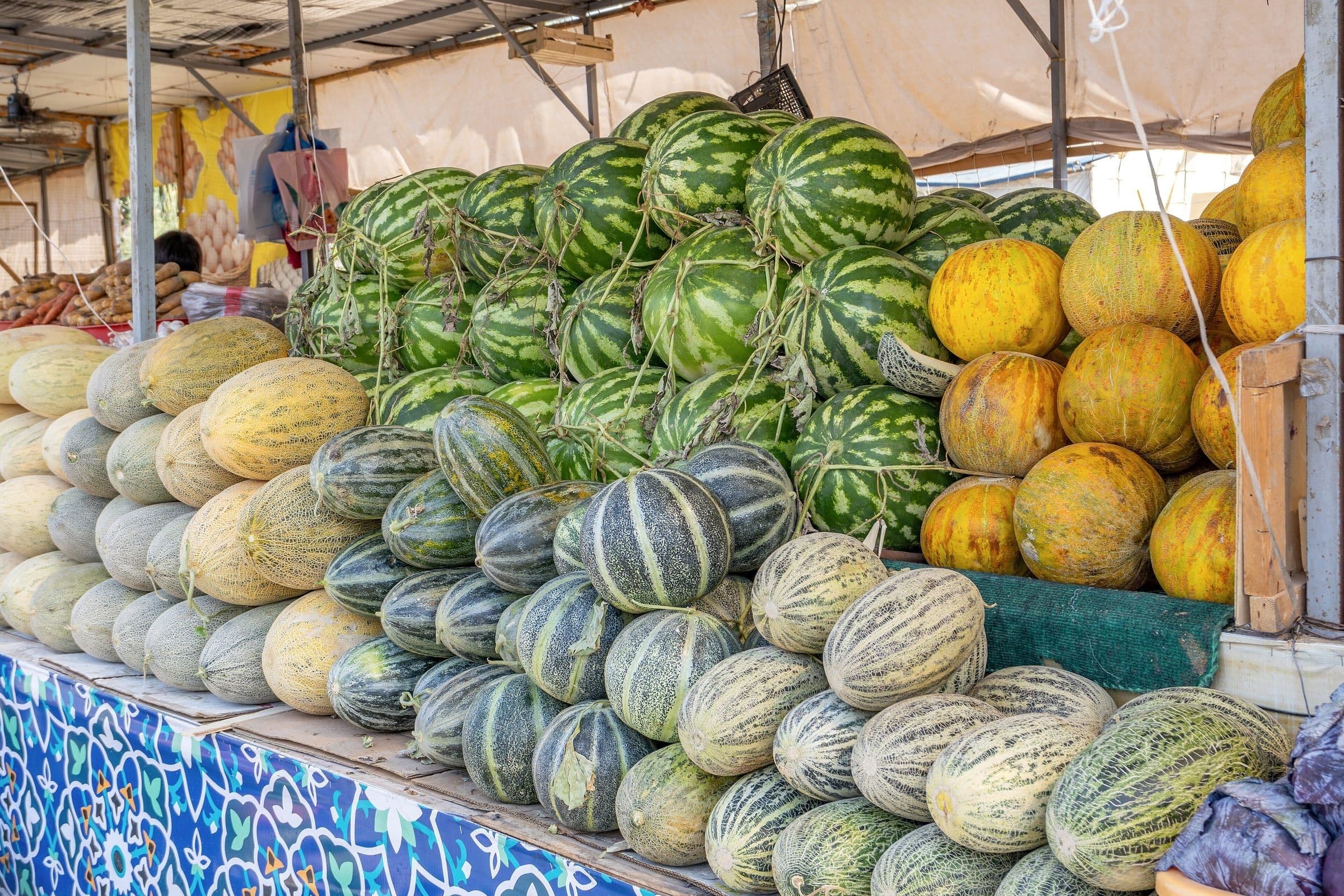
Spring, from late March to May, is green, mild and busy. Autumn, from September to early November, is clear, dry and the light on the tiles is at its best. Both are warm in the day and cool at night.
Summer is hot. Samarkand and Tashkent reach the high thirties; Bukhara and Khiva pass 40°C in July and August. It is still possible, with early starts and afternoons indoors, and hotels are cheaper. The mountains of Kyrgyzstan are at their best in exactly these months, which is why the combined trip runs in summer.
Winter, December to February, is cold, with snow in Tashkent and hard frost in Khiva, and the cities are almost empty of visitors. Navruz, the spring festival on 21 March, is the one date worth planning around.
Getting around
High-speed trains between the main cities, a private driver for everything else.
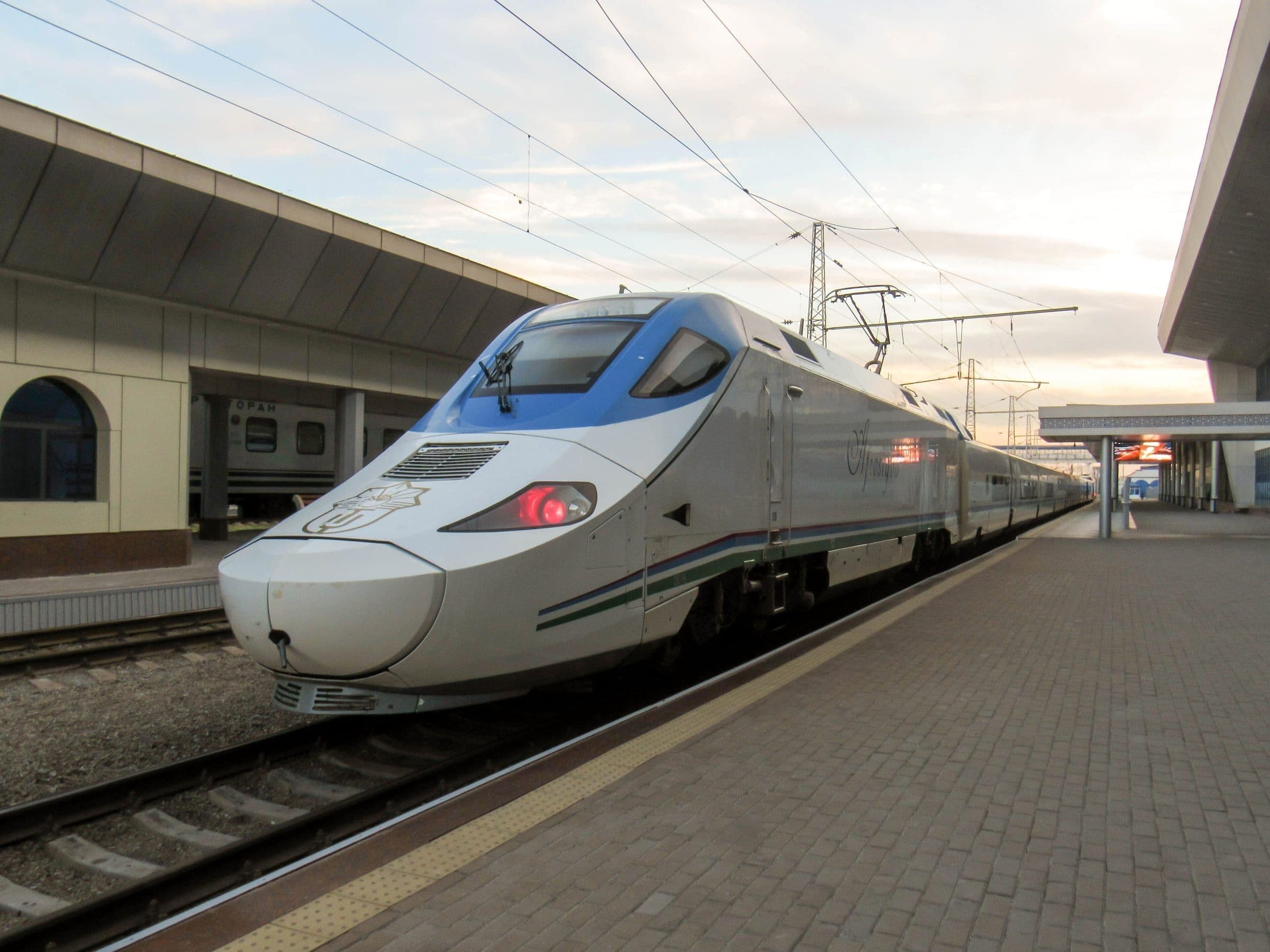
The Afrosiyob high-speed train links Tashkent, Samarkand and Bukhara: about two hours ten minutes to Samarkand and under four hours to Bukhara. Seats sell out in season, so we book them when we confirm your trip. Slower trains run the same routes and on to Khiva and the Fergana Valley.
Khiva is best reached by air: Tashkent to Urgench takes about ninety minutes, and Urgench is half an hour from the city. The drive from Bukhara across the Kyzylkum desert takes six to seven hours and is part of the experience.
Within cities and for everything the trains do not cover, you have a private car and driver. Ride-hailing apps work well in Tashkent and Samarkand if you go out on your own.
Money
The som is the currency; cards work in the cities; bring some clean US dollars.
The currency is the Uzbek som. Prices for tours and better hotels are quoted in US dollars and paid in som or by card. Bring some US dollar notes in good condition, since banks and exchange offices reject torn or marked ones. Exchange at banks or official booths; the rate is the same everywhere and there is no black market any more.
Visa and Mastercard are accepted in hotels, better restaurants and shops in Tashkent, Samarkand and Bukhara, and ATMs that take foreign cards are easy to find there. In Khiva, the Fergana Valley and the countryside, carry cash. Markets, taxis and small restaurants are cash only.
Tipping is appreciated but not expected. Round up in restaurants; a few dollars a day for a driver and more for a guide is generous.
Staying connected
A local SIM is cheap and fast; Telegram is how the country talks.
A local SIM with plenty of data costs a few dollars and is included in our longer tours. You need your passport to register it. Travel eSIMs also work. Hotels have Wi-Fi, mostly adequate, occasionally not.
Telegram is the messenger everyone in Uzbekistan uses, including us. WhatsApp works too. Some foreign services are slow at times; a VPN helps if you rely on one.
Food and drink
Plov, bread, kebabs and the best melons you will ever eat.
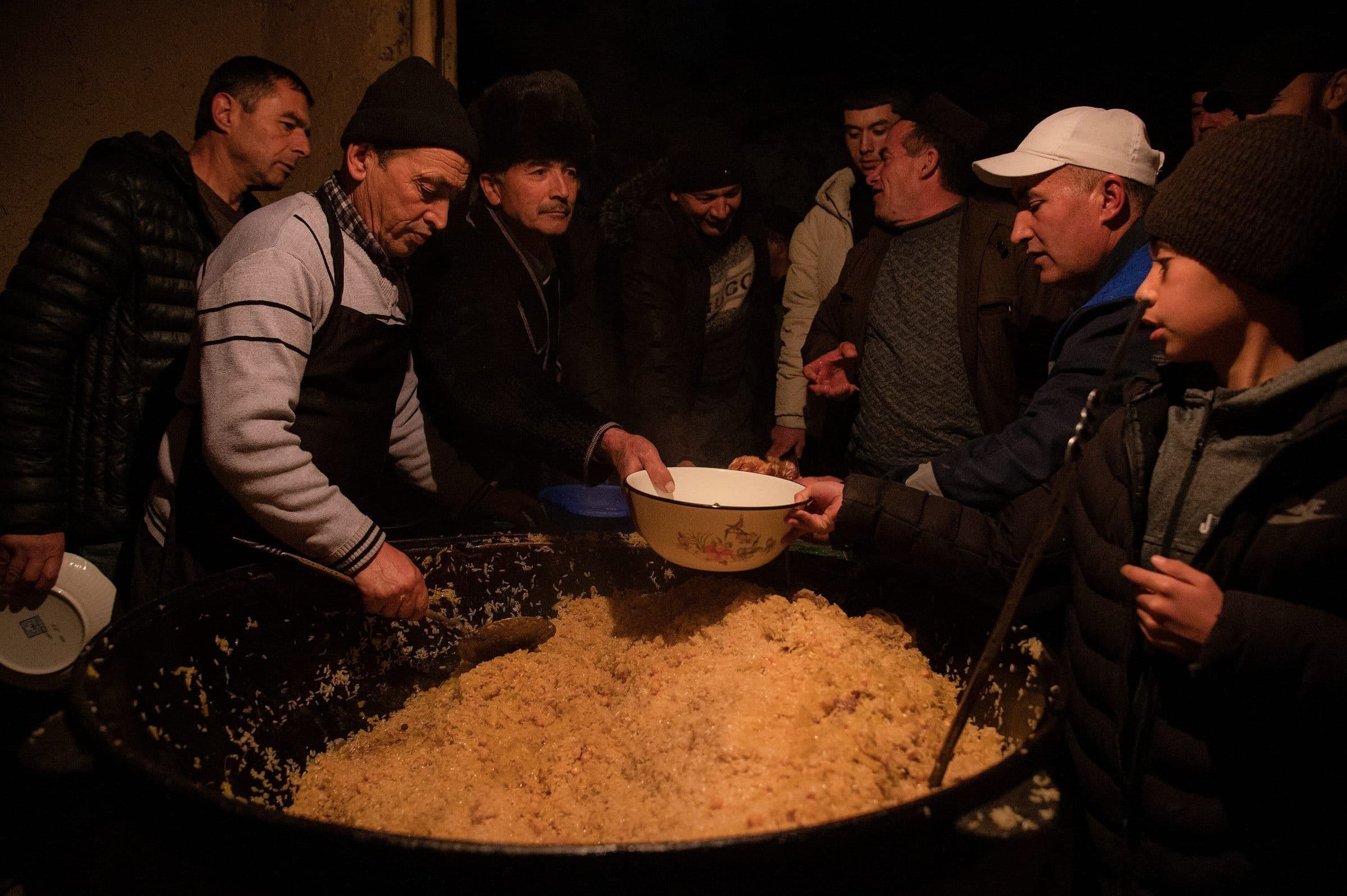
Uzbek food is built on bread and rice. Plov, rice cooked with lamb, carrots and onions in a cauldron, is the national dish and traditionally eaten at lunch. Shashlik, samsa pastries, lagman noodles and manti dumplings are everywhere. Each city bakes its own bread; Samarkand's is the famous one. Melons, grapes, apricots and pomegranates are extraordinary in season.
Green tea comes with every meal. Beer and Uzbek wine are easy to find, and vodka is offered at any celebration. Drink bottled water; tap water is not safe.
Vegetarians manage well with salads, bread, soups and vegetable dishes, and we tell restaurants in advance. Strict vegan or allergy needs are harder outside Tashkent; tell us and we plan around them.
Dress and customs
Relaxed and secular, with respect expected at religious sites.
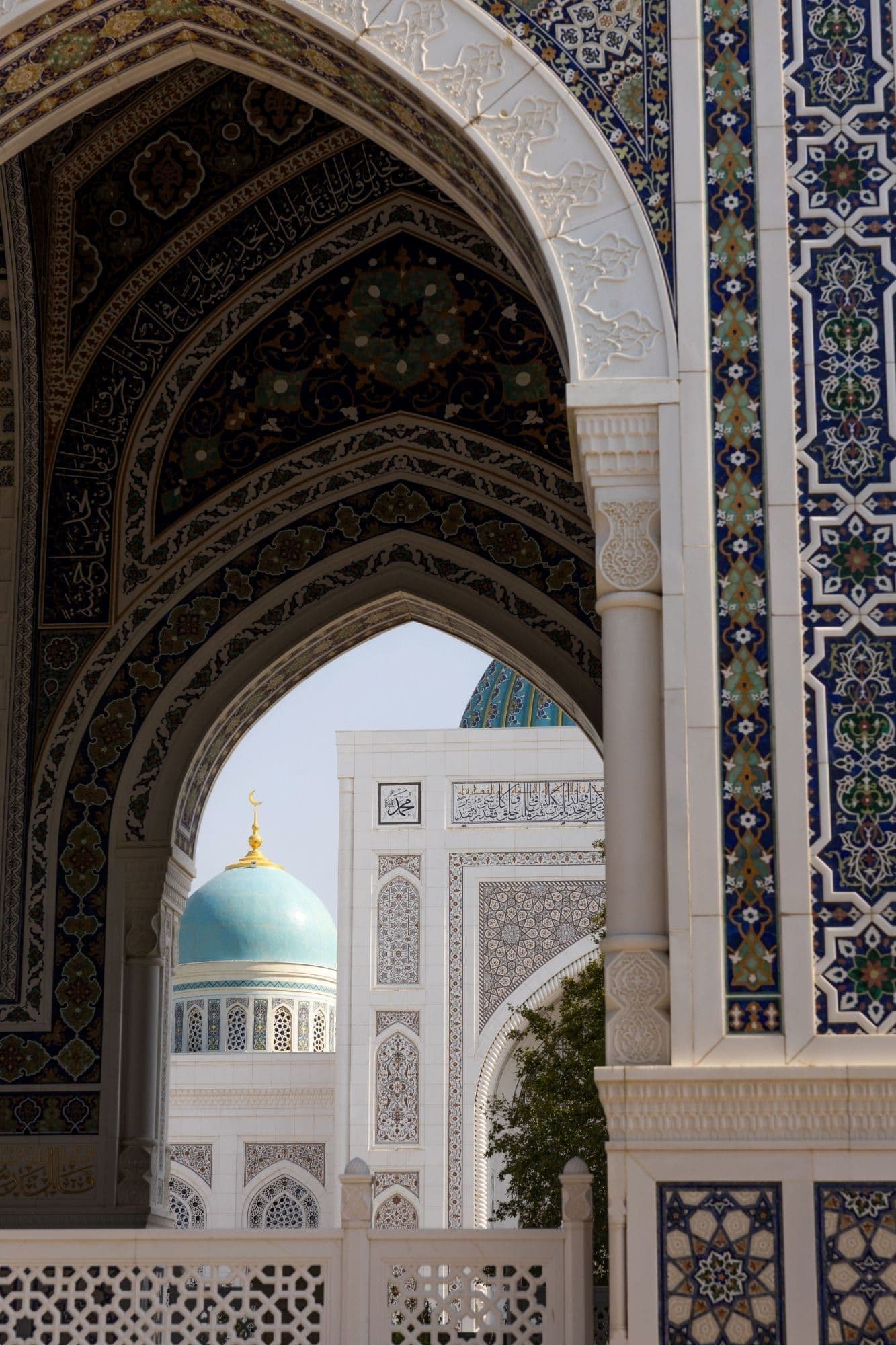
Uzbekistan is a Muslim country with a secular state and a relaxed attitude to visitors. In cities, dress as you would in southern Europe. At working mosques and mausoleums, cover shoulders and knees; women may be asked to cover their hair, so carry a light scarf. Remove shoes where you see others doing so.
Hospitality is serious. If you are invited to tea, go. Bread is never placed upside down or thrown away. Ask before photographing people, and expect to be asked for a photograph yourself, often.
Safety and health
One of the safest countries to travel in; the sun and the traffic are the hazards.
Crime against visitors is rare and the police are helpful. The real risks are ordinary ones: the sun, dehydration in summer, uneven pavements in the old towns, and traffic. Cross roads with care.
No vaccinations are required; routine ones should be up to date. Pharmacies are well stocked. Tashkent has good private clinics; elsewhere, care is basic, so travel insurance that covers medical evacuation is essential. We carry a first-aid kit and know the nearest clinic in every city.
What to pack
Comfortable shoes, a scarf, layers and a type C plug.
Shoes you can walk in all day on cobbles and dust. A sun hat and sunscreen in any month. A light scarf for mosques and for the dust in the desert. Layers: spring and autumn evenings are cool and the yurt camps are cold at night. Trousers or long skirts rather than shorts for the religious sites.
Electricity is 220 V with European type C and F sockets. Bring a small amount of cash in US dollars, a copy of your passport, any medication you need, and a refillable bottle.
Questions and answers
Are your tours private or in a group?
Private. Every trip is yours alone, with your own guide and driver, on the dates you choose. The prices on the site are for two people travelling together; smaller groups cost a little more per person and larger ones less. We can run a scheduled small-group departure for friends or a club on request.
Who are the guides?
Licensed local guides who live in the city they show you, speaking fluent English. Several also speak French, German, Italian, Spanish or Japanese; tell us if that matters.
Is Uzbekistan safe?
Yes. It is one of the safest countries in Asia for visitors, including women travelling alone. See the guide for the few practical cautions.
How does booking work?
Tell us your dates, who is travelling and what you want to see. We send a day-by-day proposal with a price, usually within a working day, and adjust it until it is right. A deposit confirms it; we then book the trains, hotels and flights and send you everything in one document.
How do we pay?
A deposit, normally 20 per cent, confirms the trip, with the balance due before you arrive. We accept bank transfer and card payment by secure link. You never pay guides or drivers directly.
What if we have to cancel?
Our terms are in your proposal. In short: full refund of everything we have not yet paid out, and we fight for the rest. Train and flight tickets are usually the only costs that cannot be recovered close to departure.
How far ahead should we book?
Two to three months for April, May, September and October, when the best hotels and the Afrosiyob train fill up. Outside those months, a few weeks is usually enough.
Do we need a visa?
Most European, British, Japanese, Korean, Canadian and Australian passports enter without one for 30 days. Many others, including the United States and India, need an electronic visa, issued online in a few days. We confirm the rule for your passport when you enquire.
Can children come?
Yes, and they are welcome everywhere. The desert camps and the Fergana workshops are the parts children like best. We adjust the pace, choose hotels with pools in summer, and keep museum time short.
How much walking is there?
A steady amount. The old towns are pedestrian and the monuments are spread out, so expect several kilometres a day on uneven ground. We can reduce it with more driving and fewer sites; tell us about any mobility needs.
What are the hotels like?
Small hotels and guesthouses in the old towns, chosen because we have stayed in them: clean, friendly, with character and breakfast. A step up to boutique or five-star is available in each city; ask for a quote.
Can we change the itinerary?
Every itinerary on the site is a starting point. Add days, drop cities, swap a museum for a bazaar. We rebuild it around you.
Plan a trip
Tell us your dates, how many of you are travelling and what you want to see. We reply with a day-by-day proposal and a price.
We reply within one working day. [email protected]